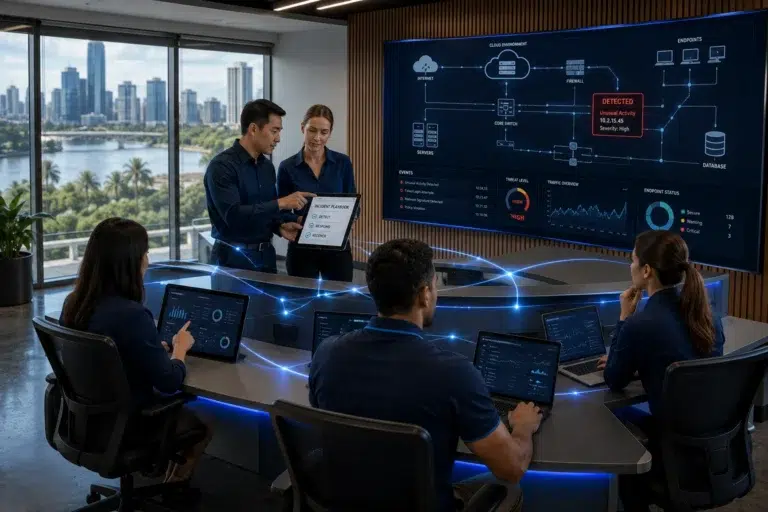
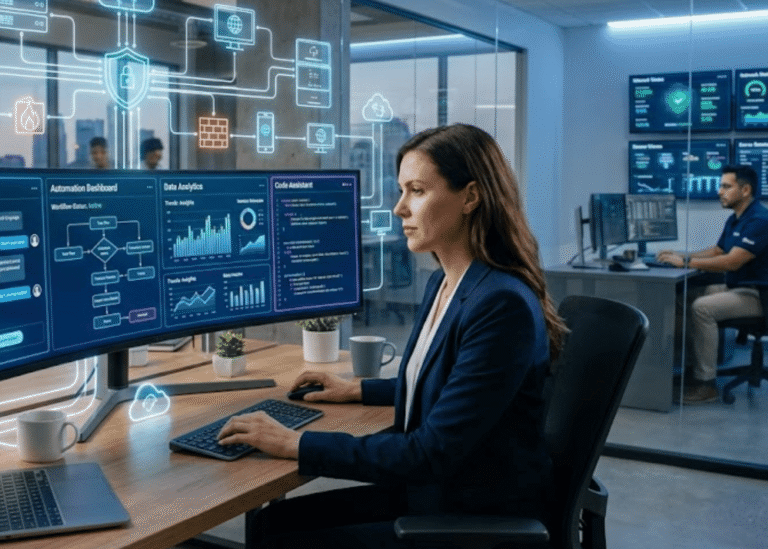
IT infrastructure management is the ongoing work of monitoring, maintaining, securing and improving the technology a business relies on, including its hardware, software, networks, data storage and cloud services.
Done well, it keeps those systems reliable today while making sure they can support the business as it changes. That includes everyday work such as monitoring, maintenance and system updates, as well as longer-term planning around capacity, upgrades and infrastructure lifecycle.
For Australian businesses, the goal is straightforward: keep the technology behind day-to-day operations secure, available and fit for purpose without waiting for something to fail first.
The High Cost of Inadequate IT Infrastructure Management
Poorly managed IT infrastructure rarely causes just one isolated problem. An unreliable server, ageing hardware, network failure or missed update can affect the systems employees rely on to work, communicate and serve customers.
The immediate cost may be downtime, lost productivity and the time required to restore affected systems. The wider impact can include delayed work, disrupted customer service, recovery costs and, depending on the systems involved, security or compliance risks.
Good infrastructure management reduces that exposure by identifying issues earlier and keeping critical systems maintained, monitored and supported. Regular maintenance, updates, backups and capacity planning all help reduce the likelihood that a preventable technical issue becomes a larger business disruption.
The objective is not to eliminate every possible outage. It is to make infrastructure more reliable, reduce avoidable failures and ensure the business is better prepared when something does go wrong.
IT infrastructure management covers several connected parts of the technology environment. Managing them together helps prevent gaps between systems, improves visibility and makes it easier to identify where performance, reliability or security issues are coming from.
Hardware and System Resources
This includes the physical and virtual systems a business relies on, such as servers, endpoint devices, operating systems and virtual machines. Infrastructure management involves monitoring their condition, maintaining configurations, planning upgrades and identifying ageing or underperforming equipment before it becomes a larger operational problem.
Software Applications and Enterprise Solutions
Business applications also depend on ongoing management. Core platforms such as Microsoft 365, CRM and ERP systems need to remain updated, appropriately configured and compatible with the wider IT environment. Managing these systems helps reduce disruption while ensuring employees can reliably access the tools they need.
Network Management and Telecommunications
Networks connect users, devices, applications and cloud services across the business. Infrastructure management includes maintaining that connectivity, monitoring network performance and addressing issues that could affect availability or security across LAN, WAN and internet connections.
Infrastructure management also covers where business data is stored, how it is accessed and how it is protected. This can include on-premises storage, cloud environments and backup systems, with capacity, availability and recovery requirements considered as part of the wider infrastructure strategy.
Cloud Integration and Services
Cloud infrastructure has become another part of the day-to-day technology environment for many businesses. Managing it can involve cloud platforms, hosted infrastructure and services such as IaaS and SaaS, alongside the connections between cloud and on-premises systems. The aim is to keep those environments manageable, secure and aligned with how the business actually uses them.
What IT infrastructure management covers
IT infrastructure management
Hardware & systems
Servers•Endpoints•Operating Systems
Business applications
Microsoft 365•CRM•ERP
Networks & connectivity
LAN•WAN•Internet
Data & storage
Storage•On-premises•Backups
Cloud services
IaaS•SaaS•Hybrid environments
Monitor→Maintain→Secure→Improve
What Changes When Your IT Infrastructure Is Properly Managed?
Properly managed IT infrastructure should make the technology behind your business more predictable. You have better visibility over what is running, what needs attention and where problems are beginning to develop.
That changes more than system performance. It affects how your business handles disruptions, plans upgrades, manages risk and responds when something goes wrong.
Fewer Problems Become Business Disruptions
Most IT problems do not begin as major incidents. A server starts running short on capacity. Hardware becomes unreliable. A backup stops completing properly. A network issue appears intermittently until one day it doesn’t.
Good infrastructure management gives those warning signs somewhere to go.
Levit8 monitors and maintains the systems behind your business so issues can be identified and addressed earlier, rather than relying on someone to notice a problem after employees are already unable to work.
Your IT Stops Being a Collection of Separate Problems
When infrastructure is managed reactively, businesses can end up treating every issue as an isolated ticket: the internet is slow, storage is running out, a server needs replacing, an application has stopped working.
The problem is that those systems are connected.
Managing infrastructure as a whole makes it easier to understand dependencies, plan changes properly and identify whether today’s small technical problem could become tomorrow’s operational one.
You Know What Needs Attention Before It Becomes Urgent
Not every piece of ageing technology needs to be replaced immediately.
But you should know what you have, what condition it is in and what is likely to need attention next.
That visibility allows businesses to plan upgrades and infrastructure spending instead of discovering an ageing server, capacity problem or unsupported system when it becomes an emergency.
Security Becomes Part of the Environment, Not an Afterthought
Infrastructure security is not one product installed on top of everything else. It depends on how systems are configured, maintained, updated, monitored and accessed. Australian businesses can also use the Australian Signals Directorate’s Essential Eight as a practical baseline for controls such as patching, backups and access management.
Managing those areas together helps reduce avoidable gaps and gives businesses a clearer picture of where infrastructure risks need attention.
And When Something Does Go Wrong, There Is Context
This one is easy to underestimate.
Troubleshooting is considerably harder when nobody has a clear picture of the environment.
Documented systems, known configurations and ongoing monitoring give the support team more context when something fails. Instead of beginning every incident by trying to understand what exists, they can focus on identifying what changed and what needs to be restored.
Levit8’s Perspective
Good infrastructure management should make IT less surprising.
You should not need an outage to discover that a server is reaching capacity, a critical system is ageing or nobody knows when a piece of infrastructure was last reviewed.
The goal is not to promise that technology will never fail. It is to give your business enough visibility, maintenance and planning that fewer problems arrive without warning.
Need Better Visibility Over Your IT Infrastructure?
By this point, the question is not whether infrastructure needs to be managed. It is whether your business has enough visibility over the systems it depends on.
Do you know which infrastructure is approaching capacity? Which systems are ageing? Whether backups are working as expected? What needs to be upgraded next? And who is responsible for noticing before any of those become urgent?
Levit8 provides Managed Infrastructure services for Australian businesses that want ongoing oversight of their technology environment without managing every system internally. We help monitor, maintain and plan across infrastructure so your team has a clearer picture of what is working, what needs attention and what comes next.
Not sure where your infrastructure stands?
Start with a conversation about what you’re running today, where the risks are and what actually needs attention.
Levit8 is a leading Australian managed IT services provider, helping businesses across industries improve performance, boost security, and scale confidently through smart, reliable technology. With a passion for efficiency, security, and client success, our local team delivers expert support, enterprise-grade solutions, and a no-nonsense approach to IT. We empower small and mid-sized businesses with future-proof systems, robust cybersecurity, and seamless support—so technology becomes an asset, not a headache.
 Managed IT Services
 Business Continuity (BCDR)
 Cloud Telephony
 Managed Infrastructure
 Microsoft Azure
 Microsoft Teams Phone
 Cyber Security Services
 Microsoft 365 For Business
 Brisbane
 Aviation
 Healthcare
 Field Service
 Finance
 Manufacturing
 Small Business
 Legal
Legal Travel