 Managed IT Services
 Business Continuity (BCDR)
 Cloud Telephony
 Managed Infrastructure
 Microsoft Azure
 Microsoft Teams Phone
 Cyber Security Services
 Microsoft 365 For Business
 Brisbane
 Aviation
 Healthcare
 Field Service
 Finance
 Manufacturing
 Small Business
 Legal
Legal Travel
Managed Cybersecurity Services: A Complete Guide for Australian Businesses
July 31, 2026by Levit8 IT Solutions

Cyber security used to be something you dealt with once. You would install antivirus software, run an IT audit every now and then, and assume your business was protected. That approach no longer reflects today’s threat landscape.
Cyber threats now affect businesses of every size, and many internal IT teams simply do not have the time, specialist expertise, or round-the-clock visibility needed to manage them proactively. This is not a reflection on internal IT teams. Cyber security has become a specialised discipline that requires ongoing attention rather than an annual check-up.
That is where managed cybersecurity services come in. It provides continuous monitoring, protection, and incident response through a specialist provider, either as part of your existing managed IT services or as a standalone service.
According to the Australian Signals Directorate, the average self-reported cost of cybercrime per business report reached A$80,850 in 2024-25, including A$56,600 for small businesses. For many Australian SMEs, that is a significant financial hit that can disrupt operations, damage customer trust, and take months to recover from.
Table of Contents
- What Are Managed Cybersecurity Services?
- How Managed Cyber Security Works
- Standalone Service or Part of Managed IT?
- Why Managed Cyber Security Matters for Australian Businesses
- Cyber Incident vs Data Breach vs Notifiable Data Breach
- What Is Included in Managed Cybersecurity Services?
- Managed Cyber Security vs Reactive Security
- Managed IT Services vs Managed Cyber Security Services
- Benefits of Managed Cyber Security Services
- Limitations and Common Misconceptions
- How to Choose a Managed Cyber Security Provider
- How Much Do Managed Cyber Security Services Cost?
- Is Managed Cyber Security Right for Your Business?
- Frequently Asked Questions
What Are Managed Cybersecurity Services?
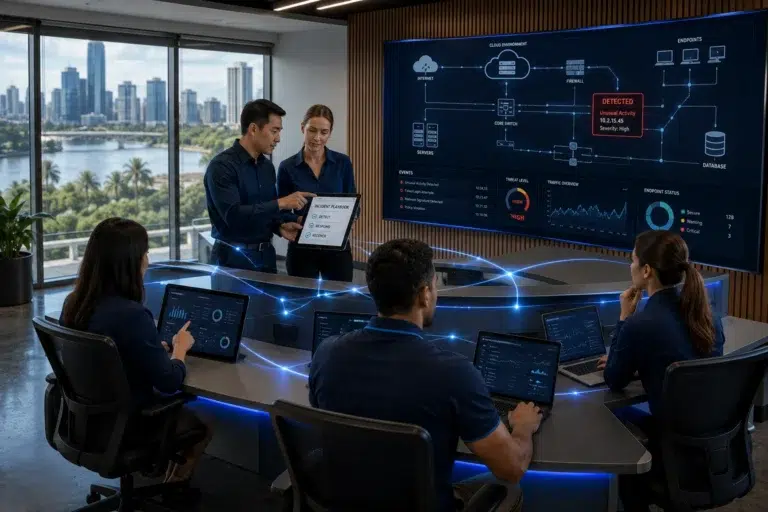
Simply put, managed cybersecurity services involve an external provider continuously monitoring your systems, reducing cyber risk, and responding to threats before they become major incidents. Instead of only stepping in when something goes wrong, they work proactively to help keep your business secure.
Managed cyber security is often misunderstood, so it is just as important to explain what it is not.
- It is not just buying antivirus software and hoping that is enough.
- It is not installing a firewall once and forgetting about it.
- It is not only calling IT when something visibly breaks.
- It is not handing over all responsibility for your business’s cyber security.
A managed provider operates the security tools, monitors for threats, and responds to incidents, but your business still owns decisions around risk, governance, and compliance. Managed cyber security is a partnership, not a complete handover.
How Managed Cyber Security Works
While every provider has its own processes, most managed cybersecurity services follow a dedicated lifecycle:
- Assess: Understand your current environment, systems, and existing vulnerabilities.
- Prioritise: Identify which risks matter most given your business and industry.
- Implement: Roll out the protective tools and controls needed to close the gaps.
- Monitor: Watch systems continuously for unusual activity or emerging threats.
- Detect: Identify genuine threats quickly, separating real risk from noise.
- Respond: Contain and remediate incidents before they escalate.
- Report: Provide clear visibility to business leadership on what is happening and why.
- Improve: Feed lessons learned back into the process, tightening controls over time.
This process is around-the-clock rather than one-off. As threats evolve, your security controls, monitoring, and response strategies need to evolve with them.
Standalone Service or Part of Managed IT?
Managed cyber security can be delivered in different ways, depending on your existing IT resources and business needs.
Some businesses purchase it as a standalone security agreement layered on top of their existing IT support. Others have it embedded directly into a broader Managed IT Service, so support and security are handled under one roof.
A third approach, often called co-managed security, works alongside an existing internal IT team by adding specialist cyber security expertise without replacing internal staff.
Levit8’s Perspective
There is no one-size-fits-all approach. The right model depends on your existing IT capability, internal resources, and how much of the day-to-day security workload you want to manage yourself.
Why Managed Cyber Security Matters for Australian Businesses
The growing demand for managed cyber security in Australia is not driven by hype. It is being shaped by real business risks, changing ways of working, and increasing expectations from regulators, insurers, and customers.
- Credential theft and targeted phishing: Attackers increasingly target login credentials rather than trying to break through technical defences.
- Ransomware, malware, and supply chain attacks: A cyberattack does not always start with your business. A compromised supplier, vendor, or software provider can become the entry point.
- Hybrid work and cloud adoption: More devices, remote users, and cloud applications create more potential entry points for attackers.
- Increasing regulatory and commercial expectations: Cyber insurers, clients, and boards increasingly expect businesses to demonstrate strong security controls rather than simply claiming they have them.
The Office of the Australian Information Commissioner recorded 1,205 data breach notifications in 2025, the highest annual figure since mandatory reporting began and an 8% increase on 2024.
Cyber Incident vs Data Breach vs Notifiable Data Breach
These terms are often used interchangeably, but they describe different things.
- Cyber incident: Any event that threatens the confidentiality, integrity, or availability of a system. It may or may not involve the loss of personal data.
- Data breach: Personal information is accessed, disclosed, or lost without authorisation.
- Notifiable Data Breach: A data breach that is likely to result in serious harm and must be reported to both the OAIC and affected individuals under Australia’s Notifiable Data Breaches scheme.
Not every cyber incident becomes a data breach, and not every data breach is legally considered a Notifiable Data Breach. Understanding the difference helps businesses respond appropriately and meet their legal obligations if an incident occurs.
Preparation also matters before an incident occurs. A documented cyber incident response plan helps define responsibilities, escalation paths and the actions your team should take when a security event occurs.

What Is Included in Managed Cybersecurity Services?
The exact inclusions vary between providers and service plans, so there is no universal checklist. However, most managed cybersecurity services include a combination of continuous monitoring, protective technologies, identity security, and recovery capabilities.
Rather than relying on a single security product, managed cyber security combines multiple layers of protection that work together to reduce risk across your organisation.
Threat Detection and Monitoring
- 24/7 Monitoring: Day-to-day monitoring of systems and network activity to identify suspicious behaviour as early as possible.
- Log Management: Collecting and analysing logs from servers, devices, and applications to detect unusual activity that might otherwise go unnoticed.
- Real-Time Alerting: Immediate notification when genuine threats are detected, allowing faster investigation and response.
Not every warning means the same thing. Understanding security alerts and how to respond can help employees recognise suspicious activity and escalate genuine threats appropriately.
Protection Technologies
- Endpoint Protection: Detects, investigates, and helps contain threats across laptops, desktops, and servers.
- Network Security: Firewalls and network controls that help prevent unauthorised access and limit how far attackers can move if they gain entry.
- Email Filtering: Identifies phishing emails, malicious links, and harmful attachments before they reach your users.
Identity and User Security
- Multi-Factor Authentication: Adds an extra layer of identity verification beyond passwords, reducing the risk of compromised accounts.
- Security Awareness Training: Ongoing education that helps employees recognise phishing attempts, social engineering, and other common cyber threats.
Recovery and Reporting
- Immutable Backups: Backup copies that cannot be altered or deleted, helping organisations recover more effectively from ransomware attacks.
- Executive Security Reporting: Regular reporting that gives business leaders clear visibility into security risks, incidents, and overall cyber maturity.
These are some of the most common capabilities included in managed cybersecurity services, although the exact mix will depend on your provider and business requirements.
To see how these protections work together, explore Levit8’s Cyber Security Services or speak with our team about a Security Health Check.
Managed Cyber Security vs Reactive Security
Comparing these two approaches helps explain where managed cyber security delivers the most value. The difference is not whether your IT team is capable, but whether security is managed consistently or only addressed when something goes wrong.
| Reactive or Ad Hoc Security | Managed Cyber Security |
|---|---|
| Project- or incident-based | Continuous and proactive |
| Investigation begins after suspicious activity is noticed | Threats are monitored and identified earlier |
| Limited visibility between incidents | Ongoing visibility through monitoring and reporting |
| Security competes with other day-to-day IT priorities | Dedicated tools, specialist expertise, and constant coverage |
A capable internal IT team can absolutely perform many of these functions. The difference is that managed cyber security provides dedicated tools, specialist expertise, and constant coverage rather than fitting security around other day-to-day IT responsibilities.
Managed IT Services vs Managed Cybersecurity Services
Managed IT and managed cyber security are closely related, so they are often offered together. While they overlap in some areas, they serve different primary purposes.
| Managed IT Services | Managed Cybersecurity Services |
|---|---|
| Keeps technology running efficiently | Reduces cyber risk |
| Helpdesk support and workstation maintenance | Threat monitoring and detection |
| Microsoft 365 administration and network management | Identity protection and security controls |
| Vendor coordination and general IT operations | Alignment with frameworks such as the ACSC Essential Eight |
In practice, the two services complement each other. A well-managed IT environment provides the foundation for strong cyber security, while managed cyber security adds the specialist monitoring, protection, and response needed to defend against modern threats.
If you are comparing your options, explore our guides to what managed IT services are, find out what’s included in managed IT services, or learn more on our Managed IT Services page.
Benefits of Managed Cyber Security Services
The benefits of managed cyber security extend beyond preventing cyberattacks. A well-managed security program can improve operational continuity, strengthen governance, and give business leaders greater confidence in their technology environment.
Operational Benefits
Better visibility into your organisation’s security posture helps business leaders make more informed decisions. Regular reporting translates technical activity into clear insights, making it easier to understand risks, priorities, and progress over time.
Risk Reduction
Consistent monitoring and earlier threat detection help reduce the likelihood that small security issues develop into major incidents. Faster response also limits the operational and financial impact when an attack does occur.
Stronger security controls can also support conversations with insurers. Our guide to cyber insurance in Australia explains how security readiness, MFA, backups and incident planning can relate to insurance requirements.
Access to Specialist Expertise
Building and maintaining an in-house Security Operations Centre requires significant investment in people, tools, and processes. Managed cyber security gives businesses access to specialist expertise without the cost and complexity of building those capabilities internally.
Improved Business Continuity and Resilience
Effective cyber security supports business continuity by reducing downtime and improving recovery when incidents occur. When systems and data are better protected, businesses can resume normal operations more quickly and minimise disruption.
Even businesses with established security controls can develop overlooked weaknesses over time. Reviewing common cybersecurity blind spots can help identify gaps that may otherwise go unnoticed.
Alignment With Security Frameworks
Managed providers often help organisations align with recognised frameworks such as the ACSC Essential Eight, ISO 27001, and relevant Privacy Act obligations. This makes it easier to demonstrate security maturity to clients, insurers, regulators, and other stakeholders.
Increased Customer and Stakeholder Confidence
Demonstrating a mature approach to cyber security can strengthen trust with customers, suppliers, and business partners. It is increasingly common for organisations to ask about security controls during procurement or contract renewals, particularly when sensitive data is involved.
Limitations and Common Misconceptions
Managed cyber security can significantly reduce cyber risk, but it is not a guarantee against every threat. Understanding its limitations helps businesses make informed decisions and set realistic expectations.
- No provider can guarantee complete protection against every cyberattack. Any provider making that promise should be treated with caution. The goal is to reduce both the likelihood and impact of security incidents, not eliminate risk altogether.
- Managed cyber security does not replace good internal governance or employee awareness. Even the best security technologies rely on staff following basic security practices and organisational policies.
- Outsourcing cyber security does not transfer legal or regulatory responsibility. Under Australian law, business leaders remain accountable for protecting personal information and meeting applicable breach notification obligations, regardless of who manages the technical controls.
How to Choose a Managed Cyber Security Provider
Not all managed cyber security providers offer the same level of service, expertise, or support. Looking beyond pricing and comparing a few key criteria can help you choose a provider that is the right fit for your business.
- Relevant industry certifications and staff qualifications: Look for recognised certifications, ongoing training, and evidence that the provider invests in developing its cyber security expertise.
- Response time commitments and escalation procedures: Look for clearly documented response targets, escalation paths, and service levels so you know what to expect if an incident occurs.
- Executive reporting: Reporting should help business leaders understand risks, trends, and recommended actions rather than simply providing technical logs.
- Experience supporting Australian businesses: A provider familiar with Australian regulations, local business environments, and common compliance expectations is better placed to deliver practical advice.
- Technology and vendor partnerships: Ask which security tools the provider uses and why. A good provider should explain how its technology stack supports your business rather than simply listing product names.
How Much Do Managed Cyber Security Services Cost?
There is no fixed price for managed cyber security because every business has different systems, users, and security requirements. The overall cost depends on the size and complexity of the environment being protected.
Rather than charging a universal flat fee, most providers build pricing around the level of protection and ongoing management your business requires.
- Number of users: Most services scale based on the number of people, devices, or user accounts that need protection.
- Devices and infrastructure: Businesses with more laptops, servers, network equipment, and connected systems typically require more monitoring and management.
- Cloud environment: The complexity of Microsoft 365, Azure, or other cloud platforms can influence the level of security management required.
- Security and compliance requirements: Achieving higher levels of maturity against frameworks such as the ACSC Essential Eight generally requires more time, tooling, and ongoing management than baseline protection.
- Monitoring requirements: Around-the-clock monitoring and incident response require greater resources than business-hours coverage.
- Onboarding and remediation: Businesses with existing security gaps may require additional work before ongoing management can begin.
Because every environment is different, it is difficult to provide meaningful pricing without first understanding your systems, users, and business requirements.
For more context on how managed technology services are priced in Australia, read our guide to managed IT services cost in Australia.
Is Managed Cyber Security Right for Your Business?
Whether managed cyber security is the right choice depends on your business, your existing IT capabilities, and how much cyber risk you are prepared to manage internally.
While some organisations benefit from a fully managed security service, others prefer a co-managed approach or integrate cyber security into a broader managed IT service.
Levit8’s Perspective
Cyber security is not one-size-fits-all, and it should not be treated that way. Every business has different systems, people, and levels of internal IT capability. That is why we focus on recommending the model that best complements your existing people, processes, and technology rather than applying the same solution to every business.
The best place to start is by understanding your current security posture. A Security Health Check can help identify potential gaps, prioritise risks, and highlight opportunities to strengthen your cyber resilience before an incident occurs.
If your business needs ongoing protection beyond internal security controls, explore Levit8’s cyber security services for monitoring, risk reduction and practical security support.
Managed cyber security is not about eliminating every possible risk. It is about giving your business the people, processes, and technology needed to manage cyber threats proactively and respond effectively when incidents occur.
If you would like tailored advice, the Levit8 team can review your current environment and recommend an approach that aligns with your business goals and risk profile.
Frequently Asked Questions
1. What are managed cyber security services?
Managed cyber security services involve an external provider continuously monitoring your systems, reducing cyber risk, and responding to threats. Rather than only stepping in after an incident, they provide ongoing protection and security management.
2. What is included in managed cyber security?
Most managed cyber security services include 24/7 threat monitoring, endpoint protection, network security, email filtering, multi-factor authentication, security awareness training, immutable backups, and executive reporting. Exact inclusions vary between providers.
3. Is managed cyber security the same as managed IT?
No. Managed IT focuses on keeping technology running smoothly through helpdesk support, system maintenance, and Microsoft 365 administration. Managed cyber security focuses on reducing cyber risk through proactive monitoring, protective controls, and threat detection. Many businesses choose a provider that delivers both services together.
4. Can cyber security be purchased as a standalone service?
Yes. Businesses can purchase managed cyber security as a standalone service, have it embedded within a broader Managed IT Service, or run it as a co-managed arrangement alongside an existing internal IT team.
5. Does managed cyber security prevent all cyberattacks?
No provider can guarantee complete protection against every cyberattack. Managed cyber security significantly reduces risk and limits the impact of incidents, but it works alongside good internal policies and employee awareness rather than replacing them.
6. How does the Essential Eight fit into managed cyber security?
The ACSC Essential Eight is a recognised baseline framework for cyber security maturity. Managed providers typically help businesses align controls such as patching, application control, and multi-factor authentication with its recommendations.
Businesses assessing their current security maturity can use an Essential Eight security audit to identify control gaps and prioritise practical improvements.
7. How much do managed cyber security services cost?
Pricing depends on factors such as the number of users, infrastructure complexity, cloud environment, security requirements, and whether 24/7 monitoring is included. Because every business is different, costs vary significantly between organisations.
8. Do small businesses need managed cyber security?
Yes. Small businesses are increasingly targeted by cybercriminals and often have fewer internal resources to detect and respond to threats. Managed cyber security helps bridge that gap by providing ongoing monitoring, protection, and specialist expertise.
For smaller organisations without dedicated security resources, our guide to cyber security for small businesses covers the practical controls that should form the foundation of your security approach.
9. How is managed cyber security different from antivirus software?
Antivirus software is only one component of a broader cyber security strategy. Managed cyber security combines technologies such as endpoint protection, monitoring, identity security, backups, and expert oversight to provide ongoing protection rather than relying on a single security product.
Author
Levit8 IT Solutions
Levit8 is a leading Australian managed IT services provider, helping businesses across industries improve performance, boost security, and scale confidently through smart, reliable technology. With a passion for efficiency, security, and client success, our local team delivers expert support, enterprise-grade solutions, and a no-nonsense approach to IT. We empower small and mid-sized businesses with future-proof systems, robust cybersecurity, and seamless support—so technology becomes an asset, not a headache.