 Managed IT Services
 Business Continuity (BCDR)
 Cloud Telephony
 Managed Infrastructure
 Microsoft Azure
 Microsoft Teams Phone
 Cyber Security Services
 Microsoft 365 For Business
 Brisbane
 Aviation
 Healthcare
 Field Service
 Finance
 Manufacturing
 Small Business
 Legal
Legal Travel
Essential IT Solutions Every Brisbane Business Needs
November 21, 2023by Levit8 IT Solutions

Technology should help your business grow, not become another problem to manage. Whether you’re running a small business or a growing enterprise in Brisbane, the right combination of IT support, cybersecurity, cloud services, and proactive management can improve productivity, reduce downtime, and strengthen security.
This guide walks through the essential IT solutions Brisbane businesses should have in place, why each one matters, and how they work together to support long-term growth. If you’re trying to figure out what “good IT” actually looks like for your business, start here.

In this article:
- Why IT Support Alone Isn’t Enough
- Managed IT Services: The Foundation of Modern Business IT
- Cybersecurity Solutions
- Cloud Solutions That Support Hybrid Work and Business Growth
- How These IT Solutions Work Together
- How to Choose the Right IT Solutions Provider in Brisbane
- Why Brisbane Businesses Choose Levit8 for Their IT Solutions
- Frequently Asked Questions
Why IT Support Alone Isn’t Enough
A lot of Brisbane business owners still think of IT as “the people you call when something breaks.” That mindset may have worked fifteen years ago, but modern businesses rely on technology too heavily for reactive IT alone to keep up.
Today, almost every part of a business runs through technology. Your team communicates through Microsoft 365. Your files live in the cloud. Your customer data sits in a CRM. Your phone system runs over the internet. When any of these go down, work stops, not just for IT but for everyone.
That shift changes what businesses actually need from IT. It’s no longer just about fixing computers. Modern IT solutions support every part of the business, including:
- Productivity: making sure staff can do their jobs without constant interruptions or slow systems
- Security: protecting the business from ransomware, phishing, and data breaches
- Collaboration: enabling remote and hybrid teams to work together properly
- Compliance: meeting the data handling and privacy obligations that apply to your industry
There’s also a big difference between reactive IT and proactive IT. Reactive IT waits for something to break, then fixes it, usually at the worst possible time, like during a busy sales period or right before a client deadline. Proactive IT monitors systems continuously, catches problems early, and plans ahead so issues get resolved before they cost you a day of lost productivity.
For most growing Brisbane businesses, the goal is to move from reactive to proactive. That shift is really what “IT solutions” means in practice. It is not a single product, but a set of connected services that keep the business running smoothly.
Managed IT Services: The Foundation of Modern Business IT

If there’s one starting point for business IT solutions in Brisbane, it’s managed IT services. Everything else in your IT environment depends on it. A managed IT service typically includes:
24/7 monitoring. Systems are watched around the clock, not just during business hours. A server issue at 2am gets flagged before it turns into a 9am outage.
Help desk support. Staff always have someone to contact when technology gets in the way of their work, whether it’s a printer that won’t connect, a locked email account, or a slow laptop. Fast response times here directly affect how much time your team loses to small IT problems.
Maintenance and patch management. Software and systems need regular updates. Skipping patches is one of the most common ways businesses end up exposed to cyber attacks, because known vulnerabilities go unfixed for months.
Vendor management. Most businesses deal with multiple technology vendors, including internet providers, software companies, and hardware suppliers. A managed IT provider deals with those vendors on your behalf, so you’re not stuck on hold trying to sort out a billing issue with your internet company.
A preventative approach. Instead of waiting for a laptop to fail or a server to crash, a managed IT provider tracks the health of your systems and replaces or upgrades things before they cause downtime.
Think about a business with 25 staff that relies on a shared file server and Microsoft 365 for email. Without proactive monitoring, a slow hard drive failure might not get noticed until the whole server goes down and takes every shared file with it.
For many growing organisations, managed IT services for small businesses provide the proactive support needed to prevent issues before they affect day-to-day operations. With managed IT services in place, that same failing drive gets picked up in routine monitoring and replaced during a scheduled maintenance window, with zero disruption to staff.
Cybersecurity Solutions

Cybersecurity is no longer a separate add-on to IT. It’s one of the main reasons businesses invest in managed IT services today. Cyber attacks aren’t just a big-business problem. Small and mid-sized Brisbane businesses are regularly targeted, often because attackers expect them to have fewer security controls in place.
Businesses looking for a more proactive approach often combine these protections through managed cybersecurity services, giving them continuous monitoring, incident response, and ongoing security improvements.
Many attacks succeed simply because smaller businesses have fewer security controls and less dedicated IT oversight. A solid cybersecurity setup usually includes:
Endpoint protection
Every laptop, desktop, and mobile device that connects to your business is a potential entry point. Endpoint protection software monitors these devices for suspicious activity and blocks known threats before they spread.
Multi-factor authentication (MFA)
A password alone isn’t enough anymore. Multi-factor authentication (MFA) adds an extra layer of protection beyond passwords and is one of the simplest ways businesses can reduce the risk of unauthorised access. This means that even if a password is stolen through a phishing email, the attacker still cannot get in.
Email security
Phishing emails are still the number one way businesses get compromised. A convincing email asking someone in accounts to update a bank transfer, or a fake invoice from a “supplier,” can cost a business tens of thousands of dollars in minutes. Email security filters catch a large percentage of these before they ever reach a staff member’s inbox.
Staff awareness training
Technology alone can’t stop every threat. Staff need to know what a phishing email looks like, why they shouldn’t click unknown links, and who to report suspicious activity to. Businesses that run regular awareness training see far fewer successful phishing attempts.
Microsoft security tools
Most Brisbane businesses already rely on Microsoft 365 for email, collaboration, and day-to-day productivity. Making full use of its built-in security features helps close gaps many organisations don’t realise they have.
Backups
If something does get through, whether it is ransomware, accidental deletion, or hardware failure, backups are what get the business back up and running. A backup that hasn’t been tested is not a real backup. Regular restore testing is what separates a working backup strategy from a false sense of security.
Ongoing monitoring
Security monitoring needs to run continuously, with alerts raised the moment something looks wrong. Knowing how to respond to security alerts is just as important as detecting them quickly.
Cloud Solutions That Support Hybrid Work and Business Growth
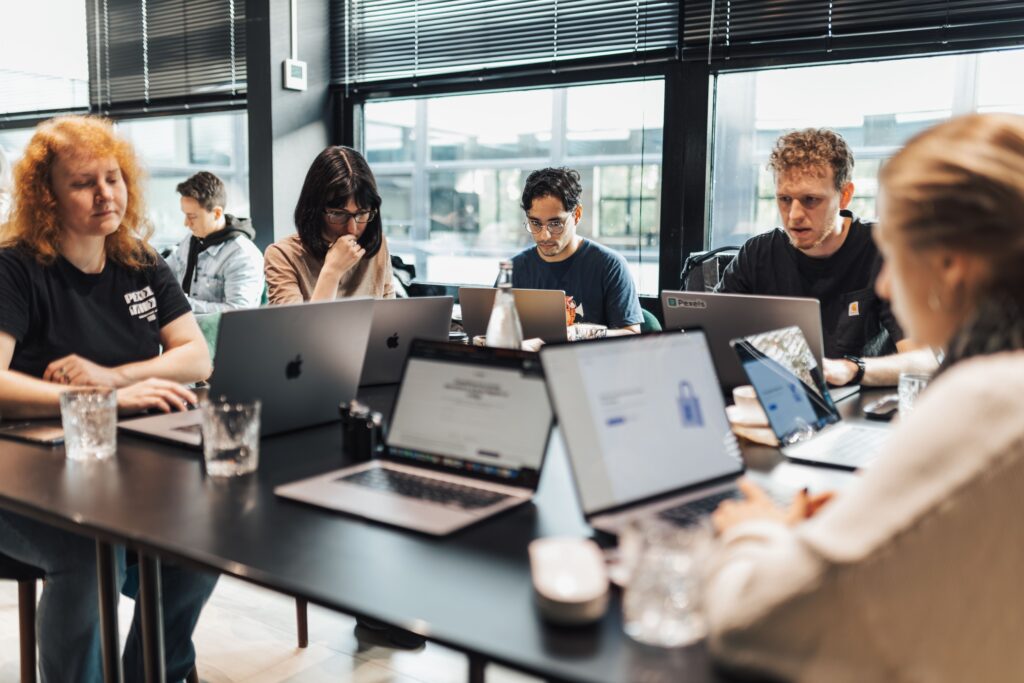
Cloud infrastructure is what makes flexible work possible. For most Brisbane businesses, cloud IT solutions now centre on two platforms: Microsoft 365 and Azure.
Microsoft 365 is the centre of day-to-day operations, providing email, collaboration, file storage, and productivity tools in a single platform. Done properly, it gives a business shared calendars, real-time document collaboration, and secure file access from anywhere, whether staff are in the office, working from home, or on-site with a client.
Azure comes into play for businesses that need more than the standard Microsoft 365 setup, such as custom applications, larger data storage needs, or specific compliance requirements. It gives growing and enterprise businesses the flexibility to scale their infrastructure up or down without buying and maintaining physical servers.
The business case for cloud solutions usually comes down to a few practical outcomes:
- Remote work becomes straightforward, because staff aren’t tied to a physical office server to access their files
- Collaboration improves, since multiple people can work on the same document at once instead of emailing versions back and forth
- File sharing with clients and contractors becomes secure and controlled, rather than relying on personal email or USB drives
- Hybrid workforces are supported properly, with the same access and security whether someone is in the office or working from a home office two days a week
Picture a Brisbane business opening a second office on the Gold Coast. With cloud-based systems already in place, new staff can be onboarded and given access to files, email, and applications from day one, without needing to set up a local server or wait for IT to configure new hardware on-site. Cloud-based systems also make it much easier to support remote and hybrid work without sacrificing productivity or security.
How These IT Solutions Work Together
No single IT solution can protect or support a business on its own. Managed IT services keep systems running and monitored. Cybersecurity protects those systems from attack. Cloud solutions give staff flexible, secure access to the tools they need. Take one of these away, and the other two become far less effective.
A business with strong cybersecurity but no proactive monitoring will still suffer long outages when hardware fails. A business with great cloud tools but weak security is an easy target for phishing and ransomware. A business with solid IT support but no cloud strategy will struggle to support remote or hybrid staff properly.
This is why most Brisbane businesses eventually move toward a single managed IT provider that handles all three instead of juggling separate vendors for support, security, and cloud services. It’s simpler to manage, and it means nothing falls through the cracks between providers pointing fingers at each other.
How to Choose the Right IT Solutions Provider in Brisbane

Not all IT providers offer the same level of service. If you’re comparing options, here’s what’s worth checking before you commit:
- ✔ Local support: a Brisbane-based team that understands local business needs and can be on-site when required, not just a call centre in another state or country.
- ✔ Fast response times: clear service level agreements that tell you exactly how quickly issues will be picked up, not vague promises.
- ✔ Security expertise: cybersecurity should be built into how the provider operates, not treated as an optional extra.
- ✔ Microsoft certifications: accreditation shows the provider has proven expertise in the platforms most Brisbane businesses actually run on.
- ✔ Transparent pricing: clear, predictable costs with no surprise fees buried in the fine print.
- ✔ Strategic advice: a provider that helps plan for growth, not just one that reacts when something breaks.
- ✔ Experience in your industry: familiarity with the compliance and operational needs specific to your sector.
Understanding managed IT services costs before signing a contract helps businesses compare providers more confidently and avoid unexpected expenses. Taking the time to check these points upfront saves a lot of frustration later. Switching IT providers because the first one didn’t deliver is a bigger disruption than most business owners expect.
Why Brisbane Businesses Choose Levit8 for Their IT Solutions
Choosing an IT provider isn’t just about technical expertise. It’s about finding a partner that understands your business and supports its long-term growth. Businesses tend to stay with providers that communicate clearly, respond quickly, and plan beyond the next technical issue.
Levit8 supports Brisbane businesses through a local team, a 24/7 help desk, and onshore support. When something goes wrong, businesses are talking to a real person who understands the local business landscape rather than being routed offshore.
As a Microsoft Solutions Partner, the team works with the platforms most Brisbane businesses already rely on day to day, rather than pushing unfamiliar tools that create more work for staff.
Good communication matters just as much. Plain-English explanations, without unnecessary jargon, make it easier for business owners and managers to understand what’s actually happening with their systems and why certain decisions are being made.
Beyond day-to-day support, strategic reviews help businesses plan ahead by identifying where the IT environment needs to grow alongside the business. With a cybersecurity-first mindset built into how systems are set up and maintained, protection is not bolted on as an afterthought.
Frequently Asked Questions
What are IT solutions for businesses?
IT solutions combine services and systems such as managed support, cybersecurity, cloud platforms, and networking to keep a business’s technology running securely and reliably. Rather than a single product, it’s a set of connected tools and processes tailored to how a specific business operates.
What IT solutions does a Brisbane business need?
Most Brisbane businesses need, at minimum, proactive IT support, cybersecurity protection, and cloud-based collaboration tools like Microsoft 365. The exact mix depends on the size of the business, how many staff work remotely, and what compliance obligations apply to the industry.
What’s the difference between IT support and managed IT services?
IT support is typically reactive. You call when something breaks, and someone fixes it. Managed IT services are proactive, with ongoing monitoring, maintenance, and planning designed to prevent problems before they happen, usually for a fixed monthly fee.
Are cloud solutions suitable for small businesses?
Yes. Cloud solutions scale to the size of the business, so a small business only pays for what it uses. Platforms like Microsoft 365 give small teams the same collaboration and security tools that larger enterprises rely on, without the cost of maintaining physical servers.
How much do managed IT services cost?
Costs vary based on the number of users, the complexity of the environment, and the level of support required, and most providers charge a fixed monthly fee per user or device. Getting a few quotes based on your specific setup is the best way to understand what’s realistic for your business.

Bringing It All Together
Technology works best when every part of your IT environment works together. Support, security, and cloud services should all work as one connected strategy. Instead of managing multiple vendors for cybersecurity, cloud, networking, and day-to-day support, many Brisbane businesses choose a single managed IT provider that brings everything under one strategy.
Whether you’re reviewing your current IT environment or planning for future growth, speaking with a provider offering managed IT services in Brisbane can help uncover opportunities to improve productivity, strengthen security, and support long-term business success.
Author
Levit8 IT Solutions
Levit8 is a leading Australian managed IT services provider, helping businesses across industries improve performance, boost security, and scale confidently through smart, reliable technology. With a passion for efficiency, security, and client success, our local team delivers expert support, enterprise-grade solutions, and a no-nonsense approach to IT. We empower small and mid-sized businesses with future-proof systems, robust cybersecurity, and seamless support—so technology becomes an asset, not a headache.